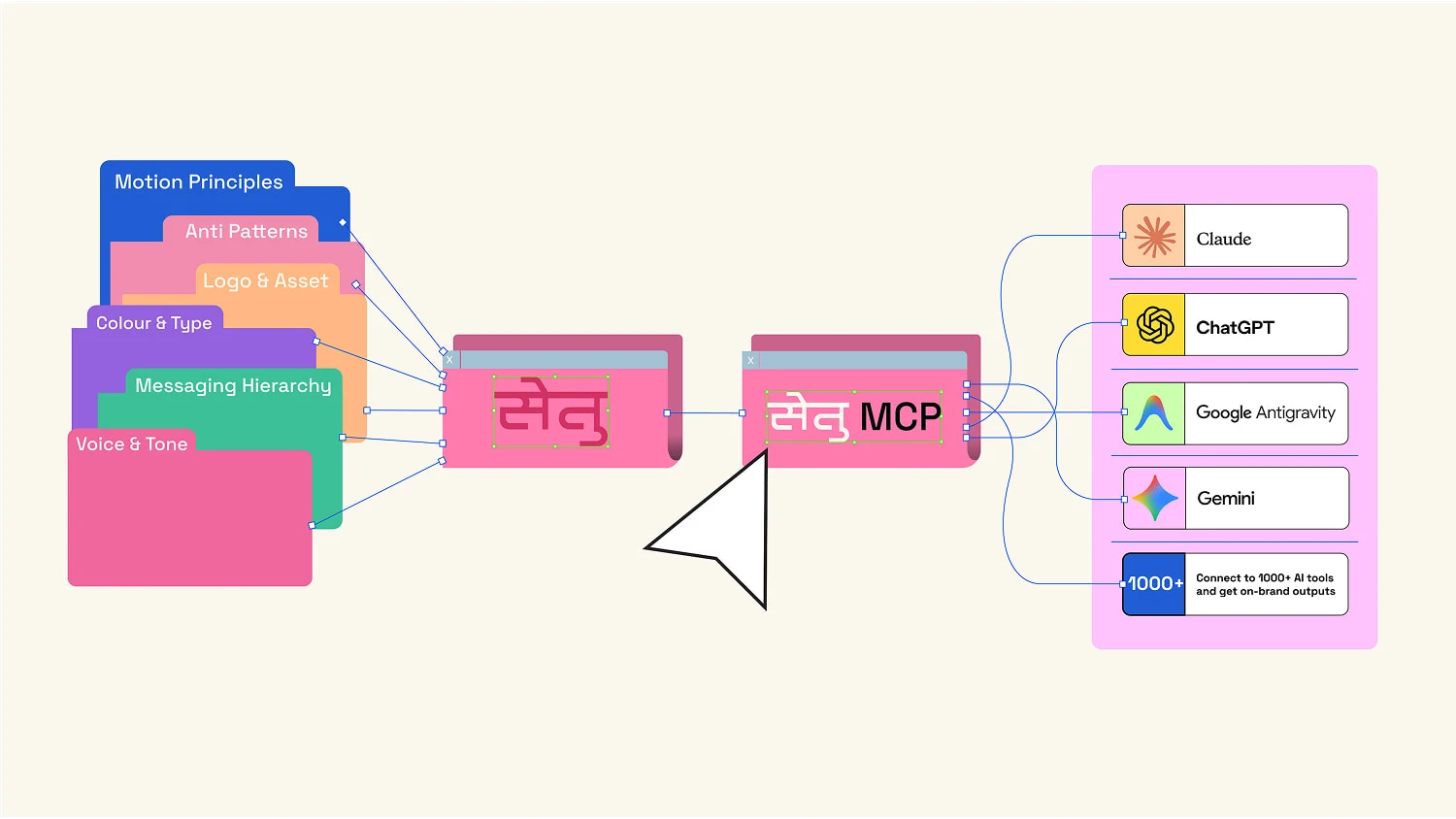
Setu connects your brand to every AI tool your company uses, so every output reflects your brand instead of the internet's average.
" height="12.575826467426463px" id="DReb_2jK0" transform="translate(5.5 5)" width="12.575534166879724px"/></svg>)



BUILT BY
Devalok is a design and strategy studio. We've built 20+ brands across identity, packaging, web design, and strategy.
Every Setu MCP carries two things: the taste of designers who know what a good brand looks and sounds like, and the judgment of strategists who have watched brands earn that recognition in the real world.
That's why we built Setu: to stop AI slop from flattening every brand into the same one, using the same design thinking behind every brand we've built.
THE
AI predicts the most likely output, so at scale every brand drifts toward the same buttons, eyebrow text, and overused words. Setu's Anti-AI Convergence Layer catches these habits across voice, layout, colour, type, space, and motion, keeping every AI on your brand before its own defaults.
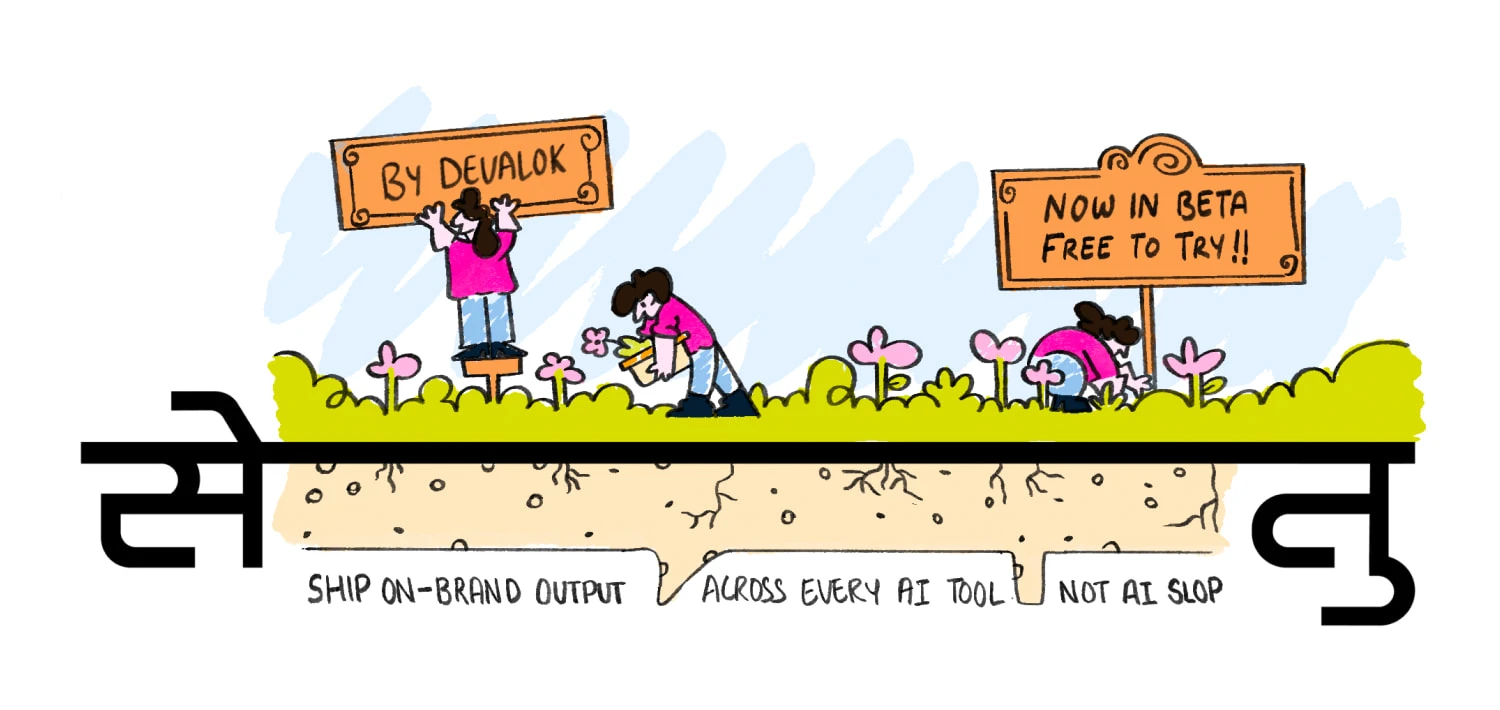
Taste cannot be automated. Every great brand began with a person and their judgment to build something intentional.
A machine only works with what you give it, and gives back exactly what it gets. Feed it taste and it carries that taste further. Feed it noise and it returns the average of everything, aka slop. Brands have always needed a human hand, and they always will, because the machine has never been what matters. The taste behind it is.
Create your own Setu inspired artwork and send us → Download the art guide
FAQs
How do I get AI tools to follow my brand guidelines?
A PDF or brand guidelines.md enters the conversation once, at the start. As the chat continues, that context competes with everything else being said, and the model leans on its own trained defaults for anything the file left unclear. Setu stays connected instead, the AI tool re-reads your brand file before it writes or designs anything, every time.
What's the difference between an MCP brand file and a brand guidelines.md?
A .md file is static, pasted in once, then crowded out as the conversation grows. An MCP brand file is live, the AI tool queries it again before every new output, working from your current rules each time. One gets re-checked, one gets left behind.
Why does AI-generated content look generic or off-brand?
Every model predicts the most likely next word, colour, or layout, based on everything it has seen. Most brand guides leave gaps, and wherever yours does, the model fills it with whatever's most common across the internet, that's why so much AI output already looks the same. Setu's Anti-AI Convergence Layer closes those gaps in voice, layout, colour, type, space, and motion.
Can ChatGPT or Claude match my brand's tone and style?
A model holds your tone only as long as it stays fresh in the conversation. Past a certain length, most models drift back toward a generic, neutral register, since that's what most of their training data sounds like. Setu keeps your actual voice rules connected throughout, so the tool works from your file directly, every time it writes.
How much does Setu cost, and is it available yet?
Setu is free to use right now, in open beta. When we publicly launch, pricing moves to Business at $10 per user for one brand, with additional brands available as an add-on, and Enterprise at custom pricing for larger teams.
I don't have complete brand guidelines. How do I get this set up?
Most brands start with something between a full brand book and a loose set of assets, not a finished guide, and that's normal. Devalok can build your Setu file for you: auditing what you have, structuring it into voice rules, messaging, colour, type, and motion principles, then connecting and verifying it against your AI tools before you sign off. This white-glove setup is a one-time $1,499.